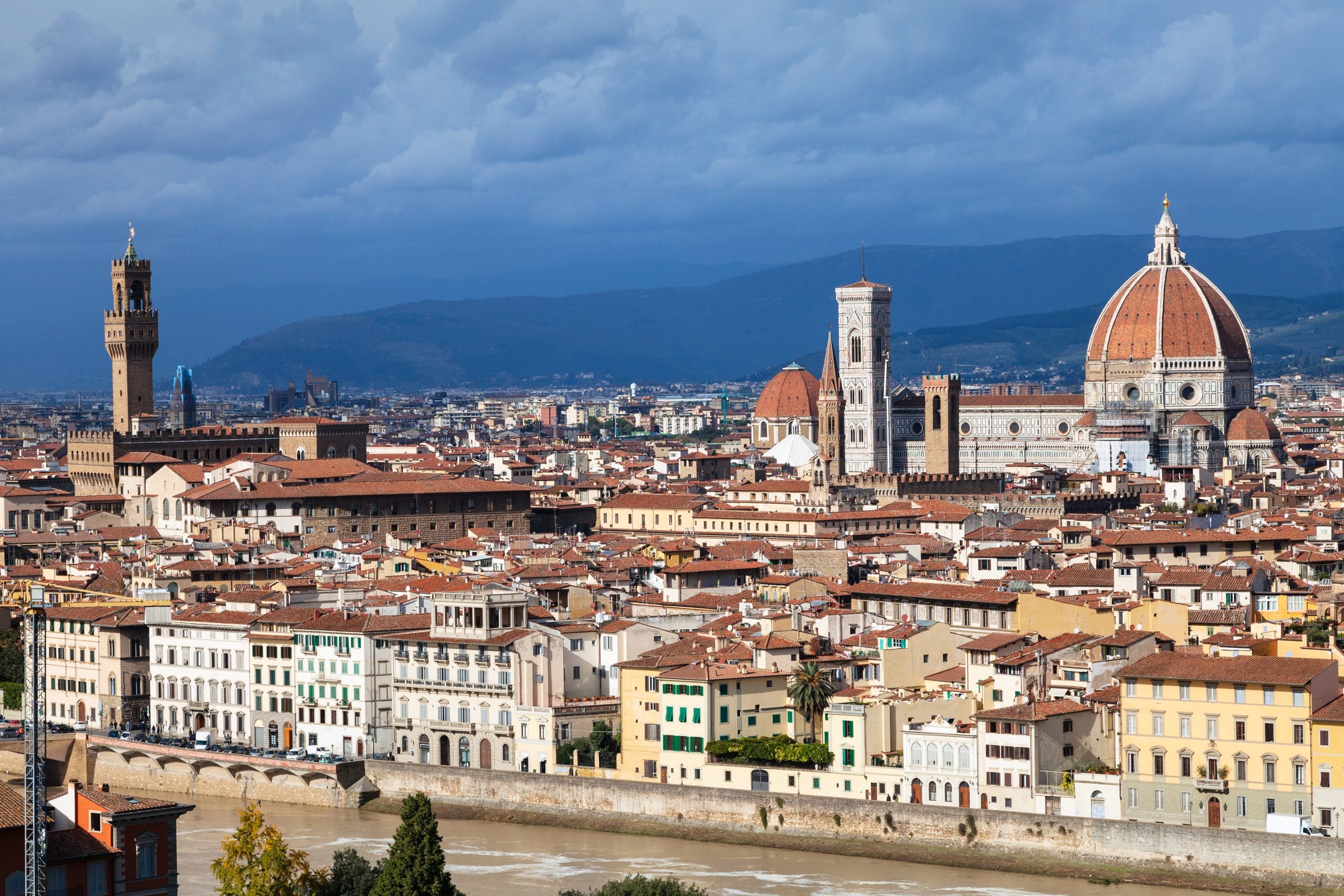
Florence

Florence is the capital of Tuscany, the capital of the Renaissance, the capital of art.
It's also been the capital of Italy in the 19th century, after Turin became the first capital of the newly-unified Italian state, and before Rome, taken, so to speak, from the hands of the Pope, became Italy's capital to remain it to this day.

Florence is not a big city. It has around half a million resident population (without counting the flocks of tourists, obviously).
It's simple to visit its historical centre, which is all contained in a relatively small area, easy to walk around.
The main railway station, Santa Maria Novella, is also in walking distance from the main sites and the heart of the city.

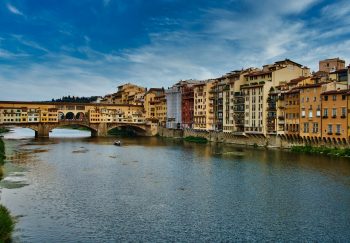
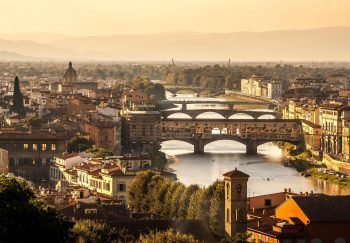
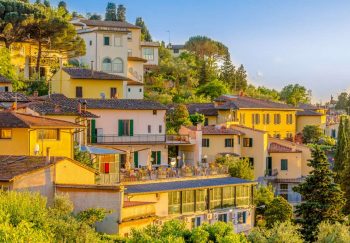
The Arno river divides Florence into two. It separates the district called 'Oltrarno' (literally 'beyond the Arno'), a traditionally poorer, working-class area, from the main, posher city. But that's not entirely true. 'Beyond the river' you'all also find many great treasures, including the Palazzo Pitti, the Boboli Gardens, the churches of Santo Spirito and Carmine, San Miniato, a church on the hills that you can see from the Lungarni, and of course the magnificent Piazzale Michelangelo, from which you have the best view of Florence, the one most traditionally pictured in cards and portrayed in films.

Florence has two main centres around which the life of the city has historically revolved: Piazza della Signoria and Piazza del Duomo. The first is associated with the political power, the second with the religious one.

Piazza della Signoria (which in Italian means 'Lordship Square') is the square where Palazzo Vecchio stands, the building which has always been the seat of government of both the city and, when Florence was the Medicis' capital, the state.
In the square itself there are many other things to see, including the Loggia dei Lanzi, an astonishing lodge with priceless sculptures like Benvenuto Cellini's masterpiece 'Perseus with the head of Medusa', Giambologna's 'Rape of the Sabines' and 'Hercules fighting the centaur Nessus' and others, the Fontana del Nettuno, and a copy of Michaelangelo's David standing on one side of Palazzo Vecchio (the original is in the Academy Gallery).
On the pavement covering the Piazza della Signoria you can see the exact spot where the Dominic friar and preacher Girolamo Savonarola was burnt at stake for heresy in 1498, marked by a plaque.
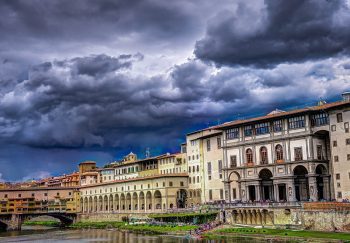
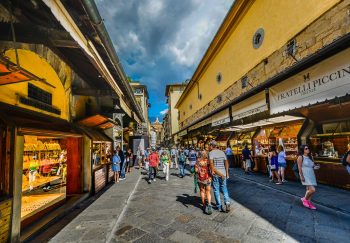
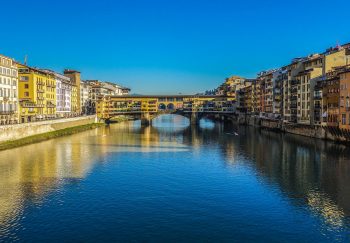
From one side of Palazzo Vecchio the Uffizi Gallery starts, connected all the way through the Vasari Corridor, a unique passage-way, over 1 kilometre long, linking Palazzo Vecchio and the Uffizi Gallery to Palazzo Pitti on the other side of the river, passing across the Arno over the Ponte Vecchio (Old Bridge). The Vasari Corridor is today an art gallery.

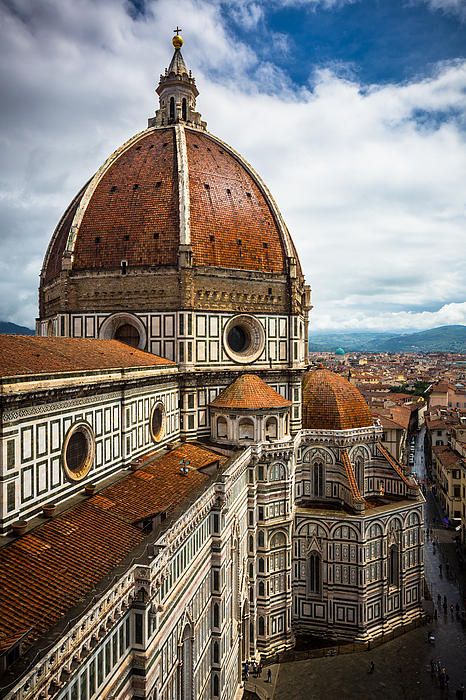
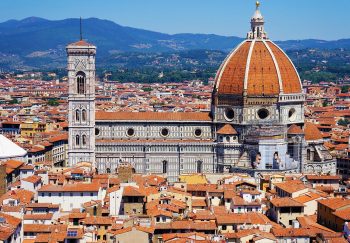
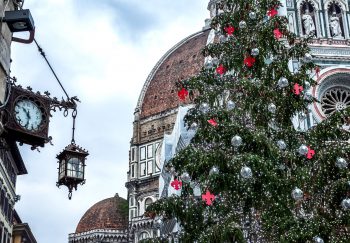
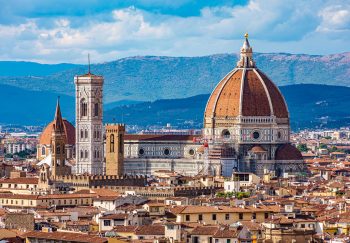
Piazza del Duomo is the Cathedral Square. The cathedral church is called Santa Maria del Fiore, and has an enormous, magnificent dome designed by Brunelleschi (Cupola del Brunelleschi), that can be seen from a long distance anywhere in Florence and nearby. Next to the main church is the bell tower designed by Giotto (Campanile di Giotto), and in front of it the Baptistry with its golden and bronze doors of spectacular beauty.


Back to Top


Home| Rome| Florence| Venice| Cinque Terre| Siena| San Gimignano| Bologna| Trains to and in Italy| Italian language courses|


© Copyright 2001-2006 Italy Travels Guide