Venice

THE GRAND CANAL

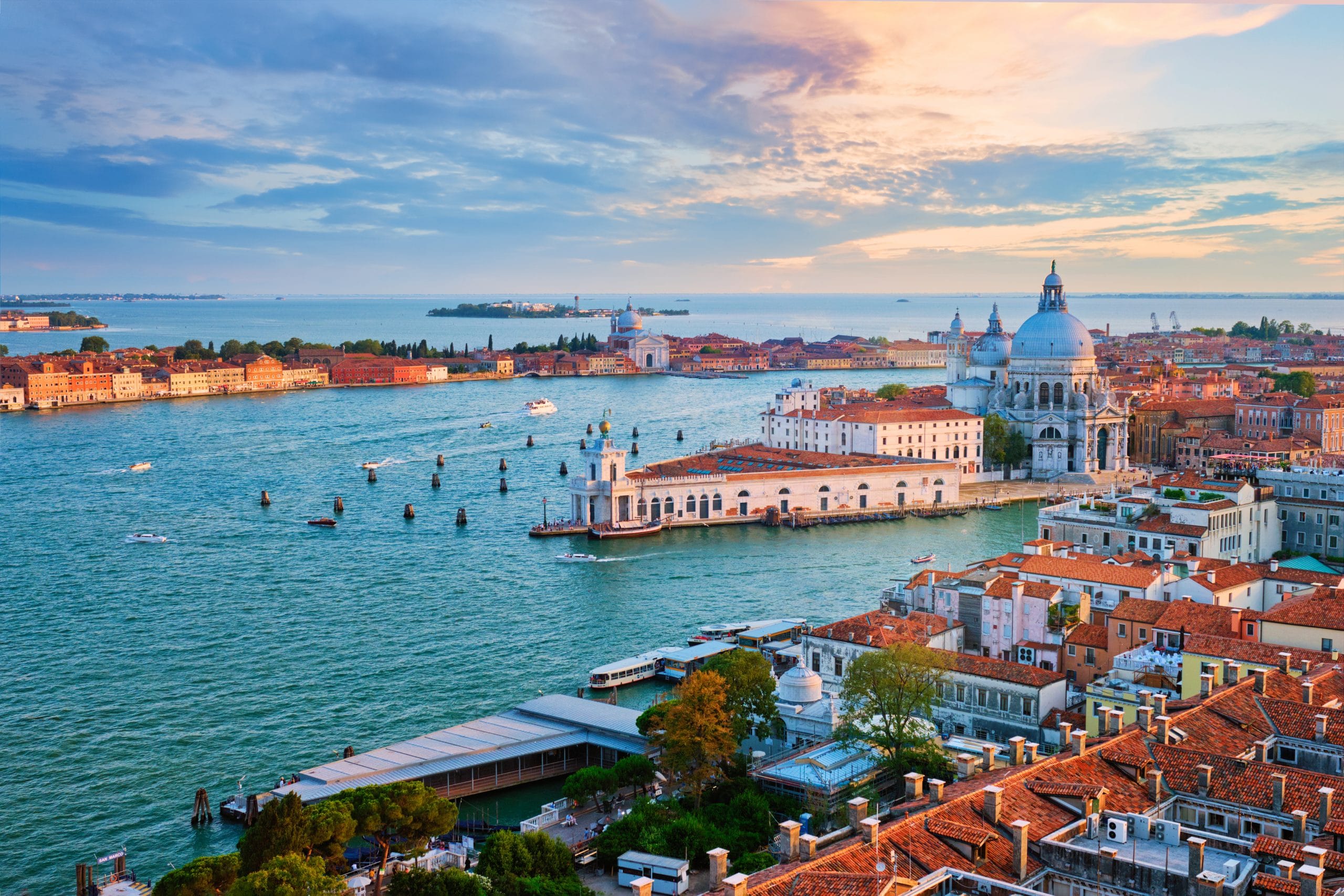
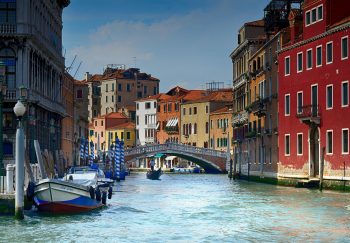
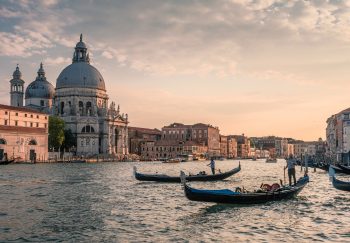
The main artery of Venice is what most visitors experience first, the bustling and splendid canal, the longest, broadest and deepest canal in the city. It runs for the length of 4 kilometres, and it has a breadth of 30-70 metres and a maximum depth of 5 metres.
The Grand Canal has always been Venice's status adress; along its looping banks the aristocrats, or Nobili Homini, as they called themselves, built a hundred marble palaces with their front doors looking onto the water, framed by the peppermint stick posts of the period. Some of them reflect Byzantine influences, but most display Venetian, Gothic or Lombardesque styles, or combinations of them.
The trip along the Grand Canal is one of the most stirring moments Venice offers, at any hour of the day, and a chance for you to share the experiences of writers of the past.

Starting from Piazzale Roma to Piazza San Marco:

THE RIALTO BRIDGE

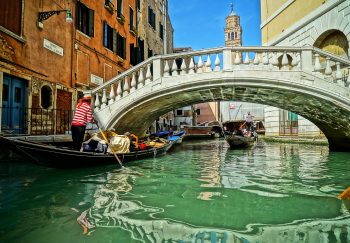
Rialto was originally the name given to all the island on which the city was built. It established itself from the centre of trade for the inhabitants of the lagoon. Originally this part of the canal was spanned by a bridge of boats, then by a wooden bridge, and then, when the latter was on the point of collapsing, the Republic of Venice held a competition for designing a new stone structure. The aptly-named engineer Antonio da Ponte proposed a single arch spanning 48 metres. Built in 1592 on 12,000 stakes (wooden piles), it has since defied the pessimistic predictions of the day and still stands, even with the extra weight of the two rows of shops that sit on the top of the bridge: 24 shops in all.
At the foot of bridge, on the left, there is a 16th century building: the 'Palazzo dei Savi', or palace of wise men concerned with the tithes.
On the right side at the foot of the bridge, there is another beautiful building of the 16th century, in Renaissance style: 'Palazzo dei Camerlenghi', palace of exchequers, magistrates of treasure.

FONDACO DEI TEDESCHI

The German Warehouse, to the left of the Rialto, was once the busy trading centre of Venice. The building is now the Post Office. In 1505 the building was remodelled and decorated with frescoes by Giorgione and Titian, fragments of which can be found in the Ca' d'Oro.


Back to Top


Home| Rome| Florence| Venice| Cinque Terre| Siena| San Gimignano| Bologna| Trains to and in Italy| Italian language courses|


© Copyright 2001-2006 Italy Travels Guide